 akar.earth
Biodiversity Credits and Ecosystem Service Value
Biodiversity credits in Indonesia explained: nature credit methods, ecosystem service valuation, co-benefit certification, monitoring and the TNFD link.
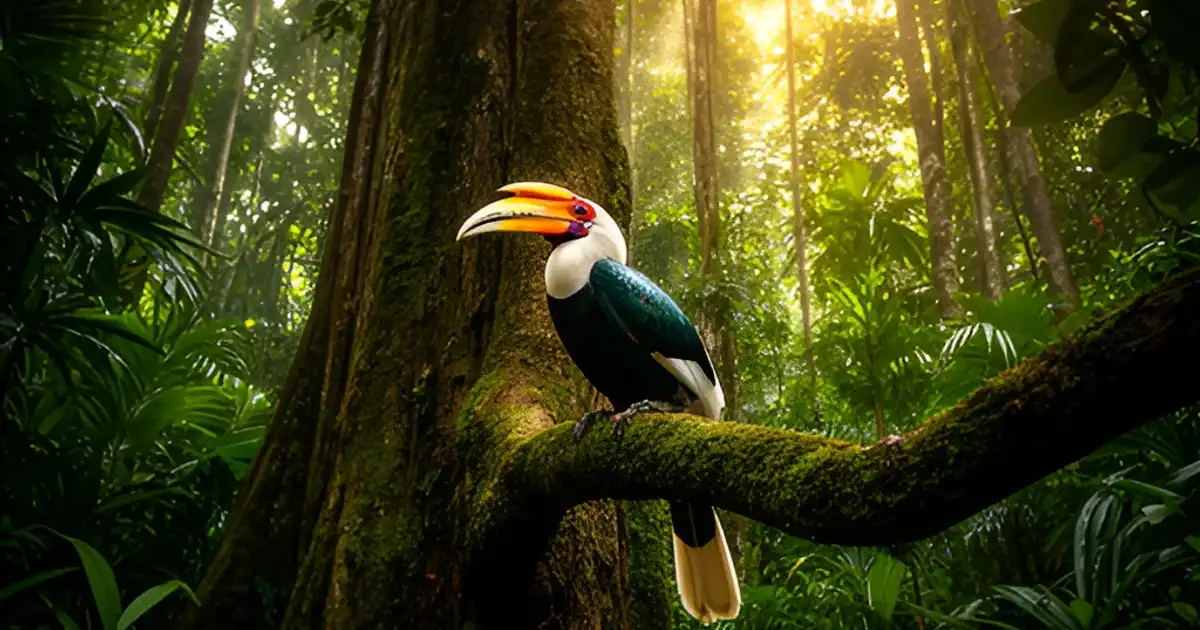
Biodiversity credits are certificates that represent measured gains in, or protection of, biodiversity in a defined place over a defined period. In Indonesia they are still an early market, mostly layered on top of carbon projects, but companies with land-intensive supply chains are starting to ask what their nature impacts and dependencies are worth.
This hub covers how biodiversity credits differ from carbon credits, the methods used to measure them, how ecosystem services are valued, and how this connects to corporate disclosure.
Why biodiversity is different from carbon
Carbon has a common unit: one tonne of CO2e is the same in Kalimantan as in Brazil. Biodiversity has no such unit. A hectare of restored lowland dipterocarp forest in Sumatra and a hectare of restored mangrove in Sulawesi support different species and ecosystem functions. That makes biodiversity credits:
- Local. Value depends on what is there and what was lost.
- Multi-metric. Methods combine habitat condition, species presence, connectivity and threat.
- Hard to offset with. Most frameworks discourage using them to cancel out damage elsewhere. They are better suited to contribution claims.
Biodiversity credits vs carbon credits compares the two in a table.
A mental model: three ways to put a value on nature
| Approach | Question it answers | Typical use |
|---|---|---|
| Biodiversity credits | How much ecological improvement did this project deliver? | Voluntary nature contributions, project finance |
| Co-benefit certification | Does this carbon project also deliver for nature and people? | Price premium on carbon credits (CCB, SD VISta) |
| Ecosystem service valuation | What is this ecosystem worth in economic terms? | Policy, land-use decisions, impact reports, TNFD |
These are complementary. A restoration project in Indonesia might sell carbon credits with CCB labels, report its ecosystem service value to investors, and pilot biodiversity units.
Credit methods
Methods vary in what they measure and how. Some score habitat condition against a reference ecosystem. Others track indicator species or species groups. Some combine area and condition into a single unit. Biodiversity credit methods compared sets out the main approaches and their strengths and weaknesses.
Two program-level options appear most often for Southeast Asian projects:
- Plan Vivo PV Nature, which issues biodiversity units under a community-centred governance model. See Plan Vivo PV Nature.
- Verra’s Nature Framework, which sets out how Verra will issue nature credits. See Verra Nature Framework.
For carbon projects that want to show biodiversity outcomes without a separate unit, the CCB Standards are the usual route.
Measuring biodiversity
Credible biodiversity claims need monitoring that can be repeated. Field surveys of plants, birds and mammals remain essential. New tools reduce cost and increase coverage:
- Passive acoustic monitoring records birds, amphibians, insects and primates over long periods.
- eDNA samples water or soil for genetic traces of species.
- Camera traps document medium and large mammals.
- Remote sensing maps habitat extent, fragmentation and canopy structure.
Biodiversity monitoring with acoustics and eDNA explains what each method can and cannot show. The same field teams and plot networks used for carbon monitoring can collect much of this data; see the dMRV hub.
High conservation value
In Indonesia, high conservation value (HCV) and high carbon stock (HCS) assessments are already standard in oil palm and pulpwood supply chains. They identify areas that must be protected before development. These assessments provide a baseline that biodiversity projects can build on. See HCV and HCSA assessments.
Valuing ecosystem services
Ecosystems provide services with economic value: water regulation, flood and storm protection, pollination, soil fertility, fisheries support and cultural value. Valuation methods include avoided cost, replacement cost, market prices and benefit transfer. Mangroves protecting a coastline from storm surge and peat forests regulating water are common Indonesian examples. Valuing ecosystem services for land projects covers the methods and their limits. Be wary of large headline numbers: valuation depends heavily on assumptions, and buyers will ask what they are.
Corporate disclosure: TNFD
The Taskforce on Nature-related Financial Disclosures (TNFD) gives companies a framework to report nature-related dependencies, impacts, risks and opportunities. It does not require buying credits. For land-intensive companies sourcing palm oil, pulp, rubber, coffee or cocoa from Indonesia, TNFD reporting draws on the same location data, land cover change and biodiversity indicators that EUDR compliance and project monitoring produce. See TNFD disclosures for land-intensive companies.
Where the market stands
Biodiversity credit markets are small and methods are still settling. No reliable price benchmarks exist for Indonesian biodiversity units. Treat any claim of a large market with caution. The more robust path today is to measure biodiversity well within carbon and restoration projects, label it through co-benefit standards, and be ready for dedicated units as demand firms up.
Common mistakes
- Using carbon logic for nature. Biodiversity outcomes are not fungible like tonnes, so do not promise offsets.
- No baseline. Without pre-project surveys, gains cannot be shown.
- Too many metrics. Choose a small set of repeatable indicators rather than surveying everything once.
- Overstated valuations. Ecosystem service values depend on assumptions; publish them.
Getting started
- Establish a baseline: species, habitat condition and threats.
- Choose metrics you can repeat at each monitoring visit.
- Decide whether you want a separate unit, a co-benefit label or a disclosure dataset.
Our biodiversity and ecosystem service valuation service designs baselines, monitoring and valuation for land projects and companies. See also the forest carbon hub. Every biodiversity page is listed below.
Frequently asked questions
What is a biodiversity credit?
A biodiversity credit is a certificate representing a measured, verified improvement or protection of biodiversity in a defined area over a defined time. Unlike carbon credits, there is no single unit such as a tonne, so methods differ widely.
Are biodiversity credits the same as carbon credits?
No. Carbon credits measure tonnes of CO2e and can be compared across projects. Biodiversity credits measure ecological condition, species or habitat, which is local and not interchangeable. Most buyers do not use them to offset impacts elsewhere.
Which standards issue biodiversity credits?
Several are emerging, including Plan Vivo's PV Nature units and Verra's Nature Framework. Co-benefit labels such as CCB add biodiversity claims to carbon credits rather than creating a separate unit.
How does TNFD relate to biodiversity credits?
TNFD is a disclosure framework for nature-related risks. It does not require companies to buy credits, but the data companies collect for TNFD often overlaps with what biodiversity projects measure.
Comparisons
- Biodiversity Credits vs Carbon Credits
Biodiversity credits vs carbon credits for Indonesian nature projects: units, metrics, standards, buyers and how to stack the two responsibly.
Glossary
- SDG: Definition
What are the SDGs (Sustainable Development Goals)? How carbon and nature projects map impacts to the 17 goals, and how SDG claims are verified.
- TNFD: Definition
What is TNFD? The Taskforce on Nature-related Financial Disclosures, its LEAP approach, and what it means for land and commodity companies in Indonesia.
Guides
- Biodiversity Credit Methods Compared
Biodiversity credit methodologies compared: Plan Vivo PV Nature, Verra's Nature Framework and other approaches, what each measures and Indonesian fit.
- Biodiversity Monitoring with Acoustics and eDNA
How bioacoustics and eDNA monitoring work for land and blue carbon projects in Indonesia, what they can prove, survey design steps and pitfalls.
- Valuing Ecosystem Services for Land Projects
A practical guide to ecosystem service valuation for land projects in Indonesia: methods, data needs, a step-by-step process and how to avoid inflated numbers.
- High Conservation Value (HCV) and HCSA Assessments
HCV and HCSA assessments explained: the six HCV categories, how the High Carbon Stock Approach classifies forest, and how both apply in Indonesia.
- TNFD Disclosures for Land-Intensive Companies
TNFD explained for plantation, forestry and commodity companies in Indonesia: the LEAP approach, what to disclose, the data you need and common mistakes.
Services
- Biodiversity and Ecosystem Service Valuation
Biodiversity and ecosystem service valuation in Indonesia: field surveys, land-use comparisons and valuation for TNFD, credits and project design.