 akar.earth
REDD+ in Indonesia: Avoided Deforestation Carbon
REDD+ in Indonesia explained: project vs jurisdictional approaches, VM0048, ART TREES, peatland, baselines and the integrity debate, with links to every guide.
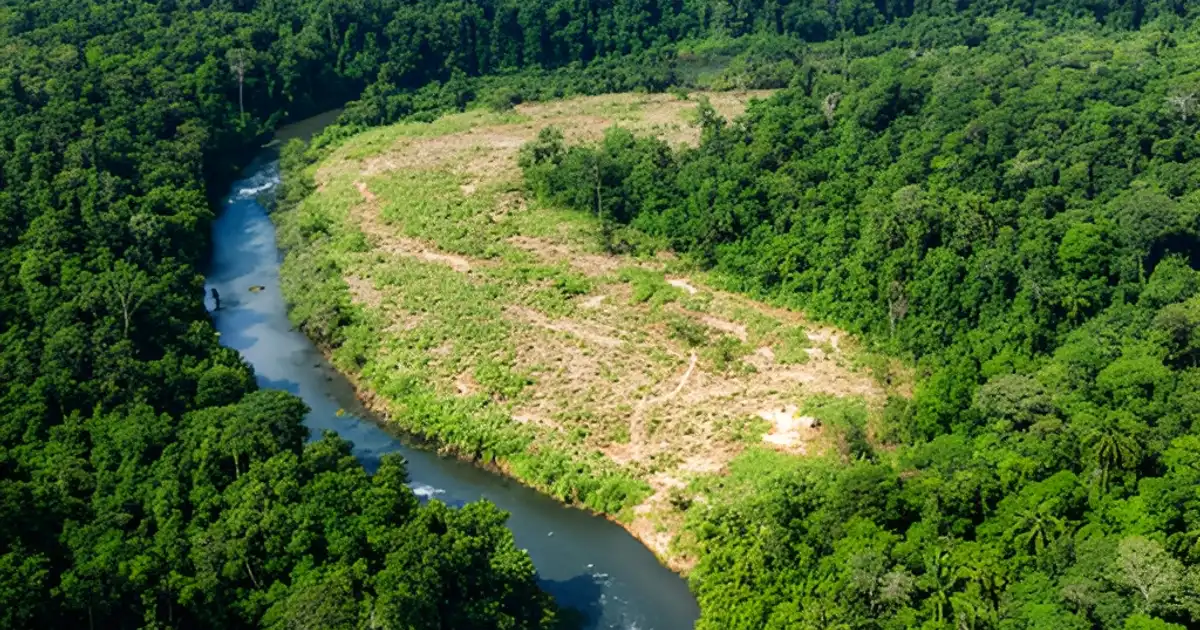
REDD+ (reducing emissions from deforestation and forest degradation) pays to keep forest standing that would otherwise be cleared. It is the largest source of Indonesian carbon credits, and it is moving from project-level baselines towards jurisdictional accounting at province and national level.
This hub explains how REDD+ works in Indonesia, the methodologies and standards in use, why baselines are contested, and what a credible project looks like now.
Why REDD+ dominates Indonesian supply
Southeast Asia issued 129 million nature-based credits under VCS and Gold Standard up to April 2025. Indonesia produced 59.3% of them and Cambodia 37.0%, mainly from REDD+. Indonesia’s lowland rainforests and peat swamps in Sumatra, Kalimantan and Papua hold very large carbon stocks, and clearing them, especially draining peat, releases large emissions. Protecting them therefore produces large credit volumes per hectare.
The drivers are well documented: conversion for oil palm and pulpwood, logging, mining, smallholder expansion and fire. Drivers of deforestation in Indonesia covers how these differ by region, which matters because the baseline has to reflect real, local threats.
A mental model: threat, baseline, proof, permanence
Every REDD+ claim rests on four questions.
- What is the threat? A REDD+ project must show credible pressure on the forest. No threat, no credits.
- What is the baseline? How much forest would have been lost without the project. This number determines how many credits are issued and is the source of most controversy.
- What is the proof? Monitoring that shows forest loss in the project area stayed below the baseline, plus leakage accounting for clearing pushed elsewhere.
- Will it last? Fire, encroachment and licence changes can reverse gains. Buffer pools cover this risk.
Project vs jurisdictional REDD+
| Feature | Project REDD+ | Jurisdictional REDD+ |
|---|---|---|
| Area | One concession or forest block | A province or country |
| Baseline | Project-specific (older methods) or allocated from a jurisdiction (VM0048) | Set at government level |
| Main standards | Verra VCS (VM0048, legacy VM0007) | ART TREES, Verra JNR |
| Proponent | Developer, concession holder, community | Government |
| Main risk | Inflated baseline, leakage | Political change, benefit distribution |
Project-level vs jurisdictional REDD+ goes deeper. Nesting projects within jurisdictional REDD+ explains how the two can coexist without double counting.
Methodologies and standards
VM0048. Verra’s consolidated REDD methodology allocates deforestation risk from a jurisdiction-level baseline to individual projects, rather than letting each project model its own reference region. This was Verra’s response to criticism that project baselines were inflated. See VM0048 and VM0048 jurisdictional baseline allocation.
VM0007. The older REDD+ methodology framework, which many existing Indonesian projects used. VM0048 vs VM0007 explains what changes for projects moving across.
ART TREES. The Architecture for REDD+ Transactions issues serialised 1 tCO2e jurisdictional credits. FCPF and ISFL credits can move into the ART registry from the World Bank’s CATS registry. ART released TREES 3.0 on 25 June 2026. See ART TREES and ART TREES vs Verra JNR.
Improved forest management. Changing logging practice in production forest, such as reduced-impact logging or converting logged forest to protection, is a related category. Improved forest management in Indonesian concessions covers how it applies to PBPH licence holders.
The baseline debate
From 2023, academic studies and investigative reporting argued that many project baselines overstated deforestation threat, so projects were issued more credits than real emission reductions. The market responded with new methodologies, jurisdictional allocation, ratings and the ICVCM CCP label. The REDD+ baseline debate and what changed sets out the arguments without spin.
For buyers, the practical lesson is to check the methodology version, how the baseline was set, the rating and whether the credit carries a CCP label. BeZero’s ratings of 11 ex-post Indonesian projects average ‘A’, which suggests Indonesian supply includes strong projects. It is still one rater and a small sample.
Peatland REDD+
Indonesia’s tropical peat stores very large amounts of carbon below ground. Drainage and fire release it quickly. Peatland REDD+ projects combine forest protection with rewetting and fire prevention. Peatland REDD+ and fire risk covers measurement and permanence issues, and the peat restoration rules page covers Indonesian legal limits.
Indonesian regulation and REDD+
Indonesia’s FOLU Net Sink 2030 target puts forest emissions at the centre of national climate policy. That shapes how the government treats international credit sales and corresponding adjustments. Perpres 110/2025 is the legal anchor for carbon trading, and Permenhut 6/2026 sets forestry carbon trading procedures with explicit space for communities and customary forests. See FOLU Net Sink 2030 and the Indonesian regulation hub.
Questions buyers should ask
Before buying Indonesian REDD+ credits, check:
- Methodology and version. Was the baseline set under a legacy method or under VM0048’s jurisdictional allocation?
- Threat evidence. Is the claimed deforestation pressure backed by local data on drivers, not only regional averages?
- Leakage. How does the project account for clearing that moves to nearby land?
- Permanence. What is the fire and peat risk, and how large is the buffer contribution?
- Rights and benefits. Who holds the licence or permit, and how do local communities share revenue?
- Domestic status. Is the project recorded in SRUK where required, and does its sale need Indonesian authorisation?
- Rating and label. Does it carry an independent rating and, where relevant, the CCP label?
Working with REDD+ today
New REDD+ projects in Indonesia need a threat analysis grounded in local drivers, a baseline that matches current methodology rules, monitoring that combines satellite alerts with field checks, and clear land and carbon rights. Our carbon credit and project due diligence service reviews these elements for buyers and investors. Developers can start with feasibility and land eligibility. Every REDD+ page is listed below.
Frequently asked questions
What is REDD+ in Indonesia?
REDD+ in Indonesia means paying to keep forest standing that would otherwise be cleared or degraded. It is the source of most Indonesian carbon credits issued so far, under both project-level standards such as Verra VCS and jurisdictional programmes.
What is the difference between project and jurisdictional REDD+?
Project REDD+ credits one defined area against its own baseline. Jurisdictional REDD+ credits a whole province or country against a government-level baseline, as in ART TREES. Nesting links projects into the jurisdictional accounts.
Which methodology replaces VM0007?
Verra's VM0048 is the consolidated REDD methodology. It allocates a jurisdiction-level baseline to projects rather than letting each project set its own. Check Verra's site for the current transition status of VM0007 projects.
Are Indonesian REDD+ credits high quality?
Quality varies by project. BeZero's 11 rated ex-post Indonesian projects average 'A', above the 'B' rating most common for nature-based projects elsewhere, but each project still needs its own due diligence.
Comparisons
- ART TREES vs Verra JNR
ART TREES vs Verra JNR for jurisdictional REDD+: who can apply, nesting, HFLD, registries, CCP status and what Indonesian provinces should consider.
- Project-Level vs Jurisdictional REDD+
Project-level vs jurisdictional REDD+ in Indonesia: baselines, leakage, who gets paid, standards, nesting and how buyers and developers should choose.
- VM0048 vs VM0007
VM0048 vs VM0007 for REDD+ in Indonesia: baseline-setting, jurisdictional allocation, transition rules, peat coverage and what it means for existing projects.
Glossary
- HFLD: Definition
What is HFLD (high forest, low deforestation)? How HFLD jurisdictions earn REDD+ credits under ART TREES, why it matters, and which Indonesian provinces fit.
- IFM: Definition
What is IFM (improved forest management)? How IFM projects change logging to store more carbon, how results are measured, and the Indonesian concession angle.
- Jurisdictional REDD+: Definition
What is jurisdictional REDD+? How REDD+ at province or national scale works, ART TREES and VCS JNR, and what jurisdictional approaches mean for Indonesia.
- Nesting: Definition
What is nesting in REDD+? How project-level carbon accounting is aligned with jurisdictional reference levels to avoid double counting, with Indonesian context.
- REDD+: Definition
What is REDD+? Reducing emissions from deforestation and forest degradation explained: project vs jurisdictional approaches, methodologies and Indonesia's role.
Guides
- Drivers of Deforestation in Indonesia
Drivers of deforestation in Indonesia explained: plantations, smallholder farming, logging, mining, fire and infrastructure, and how projects analyse drivers.
- Improved Forest Management in Indonesian Concessions
Improved forest management in Indonesia: IFM options for PBPH concessions, reduced-impact logging, logged-to-protected conversion and monitoring.
- Nesting Projects within Jurisdictional REDD+
REDD nesting explained: how projects fit inside provincial and national REDD+ programmes, how baselines are allocated, and what nesting means in Indonesia.
- Peatland REDD+ and Fire Risk
Peatland REDD fire guide: why drained tropical peat emits and burns, how projects rewet and monitor peat, and how fire risk affects credits in Indonesia.
- The REDD+ Baseline Debate and What Changed
REDD baseline overcrediting explained: why project baselines were criticised, how VM0048 and jurisdictional allocation respond, and Indonesian impacts.