 akar.earth
Agroforestry Carbon and Smallholder Landscapes
Agroforestry carbon for smallholders in Indonesia: coffee, cocoa and rubber systems, soil carbon, consent and one plot dataset for carbon and EUDR.
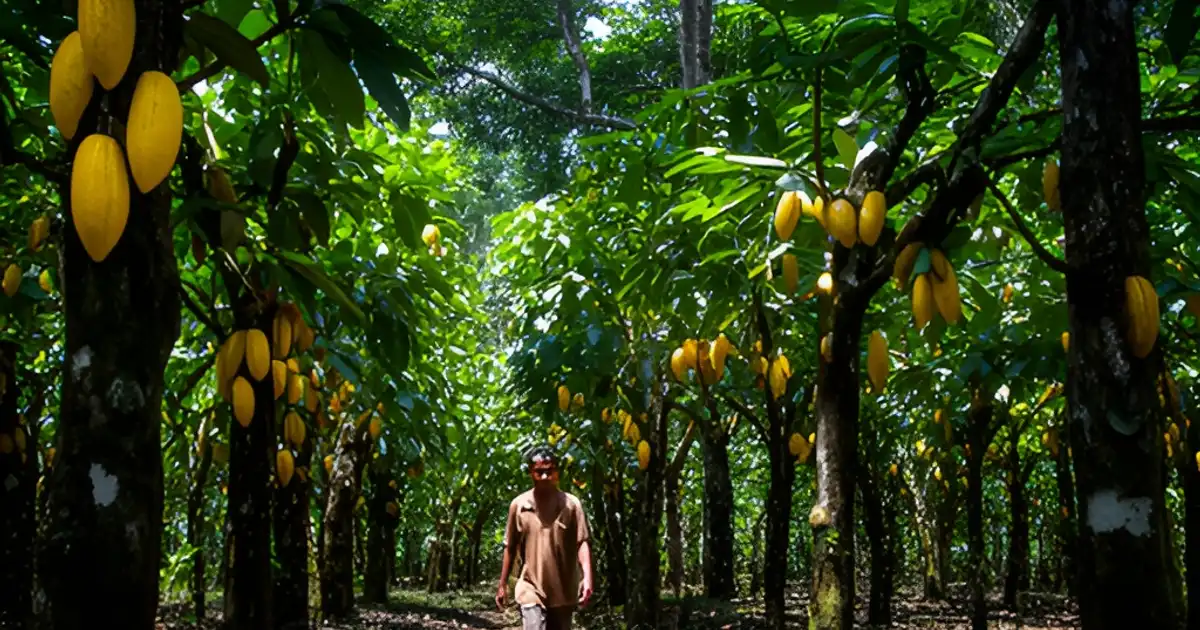
Agroforestry carbon comes from adding and keeping trees on farms, such as shade trees in coffee and cocoa or mixed trees in rubber gardens, and measuring the extra carbon they store. In Indonesia, where most coffee, cocoa and rubber is grown by smallholders, agroforestry projects can pay farmers for carbon while building the plot-level evidence the EUDR now demands.
This hub covers how agroforestry carbon works, the main Indonesian systems, the soil carbon question, and the social and data work that makes smallholder projects verifiable.
Why agroforestry fits Indonesia
Indonesian smallholders already farm with trees. Coffee in Sumatra and Java is often grown under shade. Cocoa in Sulawesi and Sumatra often grows with fruit and timber trees. “Jungle rubber” in Sumatra and Kalimantan mixes rubber with forest species. These systems hold more carbon than monoculture, support more biodiversity and give farmers fruit, timber and spice income alongside the main crop.
Policy also points this way. Permenhut 6/2026, socialised on 29 April 2026, names social forestry groups, customary forests and communities as legitimate, equal participants in forestry carbon trading. Many coffee and agroforestry farmers work inside social forestry permits.
A mental model: farm, plot, tree, farmer
| Layer | What you need | Why it matters |
|---|---|---|
| Farmer | Identity, consent, tenure evidence, benefit agreement | Without consent and clear rights, credits cannot be sold |
| Plot | Boundary polygon, land cover history | Proves eligibility for carbon and deforestation-free status for EUDR |
| Tree | Species, DBH, height, planting date | Drives the carbon estimate |
| Farm | Management practices, harvests, inputs | Affects soil carbon, leakage and permanence |
Each layer is collected on the farm, often in the same visit.
Agroforestry systems in Indonesia
- Coffee. Arabica in highland areas and robusta at lower elevations, often with shade trees. Carbon in coffee agroforestry.
- Cocoa. Smallholder cocoa with shade and fruit trees. Carbon in cocoa agroforestry.
- Rubber. From jungle rubber to clonal plantations with intercrops. Jungle rubber and rubber agroforestry.
Agroforestry vs monoculture plantation carbon compares carbon, risk and livelihoods. Species profiles for coffee arabica, cacao, rubber, durian, candlenut and many shade trees are in the species section.
How agroforestry is credited
Two methodology routes are common.
- ARR under VM0047. Planting new trees on farmland that was not forest. VM0047 v1.1 has a census-based approach suited to scattered smallholder plantings where every tree is counted. See the ARR hub.
- Improved agricultural land management under VM0042. Changes in farm practice, including adding trees, that increase soil and biomass carbon. See VM0042.
Community-centred projects often use Plan Vivo, which emphasises local governance, safeguards and benefit sharing.
Soil carbon
Soil carbon can rise under agroforestry, but it is slow, variable and expensive to measure. Sampling must be designed carefully, and modelling (for example with process models such as DNDC) is often used alongside measurement. Soil carbon on smallholder farms explains when it is worth crediting and when it is better left as a co-benefit.
People first
Smallholder projects succeed or fail on trust. Farmers need to understand what they are signing, what they will be paid, and what happens if they cut a tree.
- Farmer registration, FPIC and consent records covers how to document free, prior and informed consent in a way verifiers accept.
- Clear benefit sharing and a working grievance mechanism prevent disputes that can stop a project.
One dataset for carbon and EUDR
The EUDR applies, according to the Commission, from 30 December 2026. Coffee, cocoa and rubber exporters must show that each plot was not deforested after 31 December 2020, with geolocation for every plot and polygons for plots over 4 ha. Mass balance is not accepted.
Those are the same farms an agroforestry carbon project measures. Farmer records, plot polygons, imagery history and tree inventories can serve both purposes. That cuts cost, gives farmers two income-linked reasons to participate, and gives buyers consistent evidence. One field dataset for carbon and EUDR explains how to design for both. EUDR and agroforestry covers how trees on farms interact with the EUDR forest definition. See the EUDR hub for the full regulation.
Risks to manage
- Permanence. Farmers may cut trees for timber or to replant. Contracts and buffer contributions must account for this.
- Leakage. If agroforestry reduces crop output, production may move elsewhere.
- Measurement cost. Many small farms mean many plots; sampling design and mobile tools keep cost down.
- Over-promising. Use conservative estimates, especially for soil carbon.
Scale and aggregation
A single smallholder farm is too small to carry the cost of validation and verification on its own. Agroforestry projects therefore group hundreds or thousands of farms under one design, usually through a cooperative, farmer group or social forestry group. Grouped project rules let new farms join over time if they meet the same eligibility criteria. Good aggregation needs a clear entity to sign contracts, a farmer registry linked to plots, and a fair way to distribute payments. Aggregating smallholders into one ARR project covers the mechanics.
What farmers ask first
- Who owns the trees and the carbon? The answer must be written into the farmer agreement.
- How much will I be paid, and when? Clear payment schedules linked to measurable milestones, such as survival, build trust.
- Can I still harvest fruit and timber? Usually fruit yes; timber harvest must be planned so carbon stays above committed levels.
- What if I leave the project? Exit rules and their effect on payments should be explained before enrolment.
Getting started
Our field data campaigns register farmers, map plots with RTK and drones, and measure trees, producing one dataset that supports both carbon monitoring and EUDR due diligence. See also the forest carbon hub. Every agroforestry page is listed below.
Frequently asked questions
Can smallholder agroforestry generate carbon credits?
Yes. Adding trees to coffee, cocoa or rubber farms increases biomass carbon, which can be credited under ARR methodologies such as VM0047 or under VM0042 for agricultural land. Projects usually group many farms under one design.
How much carbon does agroforestry store?
It depends on species, tree density, age and site. Shade trees and fruit trees add most of the biomass. Estimates should come from field measurements and published allometric equations, not generic per-hectare figures.
Does agroforestry count as forest under the EUDR?
Agricultural plantations, including agroforestry systems whose main use is agriculture, are generally treated as agricultural land rather than forest. Check the EUDR forest definition and Commission guidance for your situation.
Why combine carbon and EUDR data?
Both need plot polygons, farmer records and evidence of land cover over time. Collecting them once for both purposes lowers cost and gives farmers two reasons to take part.
Comparisons
- Agroforestry vs Monoculture Plantation Carbon
Agroforestry vs monoculture plantation carbon in Indonesia: carbon stocks, harvest accounting, risk, biodiversity and which ARR design fits.
Glossary
- Agroforestry: Definition
What is agroforestry? Growing trees with crops or livestock, why it matters for carbon and smallholder incomes, and how it is treated under EUDR in Indonesia.
- ALM: Definition
What is ALM (agricultural land management)? How ALM projects build soil carbon and cut farm emissions, and how they fit Indonesian smallholders.
- Benefit sharing: Definition
What is benefit sharing in carbon projects? How carbon revenue is split between developers, communities and government, with Indonesian rules in view.
- Biochar: Definition
What is biochar? How heating biomass without oxygen stores carbon in soil, how biochar carbon removal credits work, and its potential in Indonesia.
- Co-benefits: Definition
What are co-benefits in carbon projects? The social, biodiversity and water gains beyond carbon, how they are certified, and how buyers value them.
- FPIC: Definition
What is FPIC (free, prior and informed consent)? How it applies to forest carbon projects with communities and Indigenous peoples in Indonesia.
- Grievance mechanism: Definition
What is a grievance mechanism? How carbon and agroforestry projects let communities raise and resolve complaints, and what standards expect.
- Safeguards: Definition
What are safeguards in forest carbon and REDD+? The social and environmental protections projects must apply, and how they are monitored in Indonesia.
- Smallholder: Definition
What is a smallholder? How smallholder farmers are defined in Indonesia, and why they matter for agroforestry carbon projects and EUDR compliance.
- Soil organic carbon: Definition
What is soil organic carbon (SOC)? Definition, how SOC stocks are sampled and calculated, and how agroforestry and peat projects in Indonesia use it.
Guides
- Carbon in Cocoa Agroforestry Systems
Cocoa agroforestry carbon explained: where carbon sits, how Sulawesi and Sumatra smallholder projects measure and credit it, and how it supports EUDR evidence.
- Carbon in Coffee Agroforestry Systems
How much carbon coffee agroforestry stores, how shade trees are measured and credited, and how Indonesian coffee projects link carbon with EUDR data.
- Farmer Registration, FPIC and Consent Records
How to run FPIC for a carbon project with smallholders in Indonesia: registration steps, what consent records must show, and mistakes that fail verification.
- One Field Dataset for Carbon and EUDR
How to design one field dataset that serves both carbon credit MRV and EUDR due diligence for coffee, cocoa, rubber, palm oil and wood supply chains.
- Jungle Rubber and Rubber Agroforestry
What jungle rubber and rubber agroforestry are, how they compare with monoculture for carbon and biodiversity, and what EUDR means for Indonesian rubber farms.
- Soil Carbon on Smallholder Farms
Can smallholder farms earn soil carbon credits? How soil carbon is measured, which methodologies apply, cost and permanence issues, and Indonesia specifics.